Defrosting Nature? Look, See, Pray

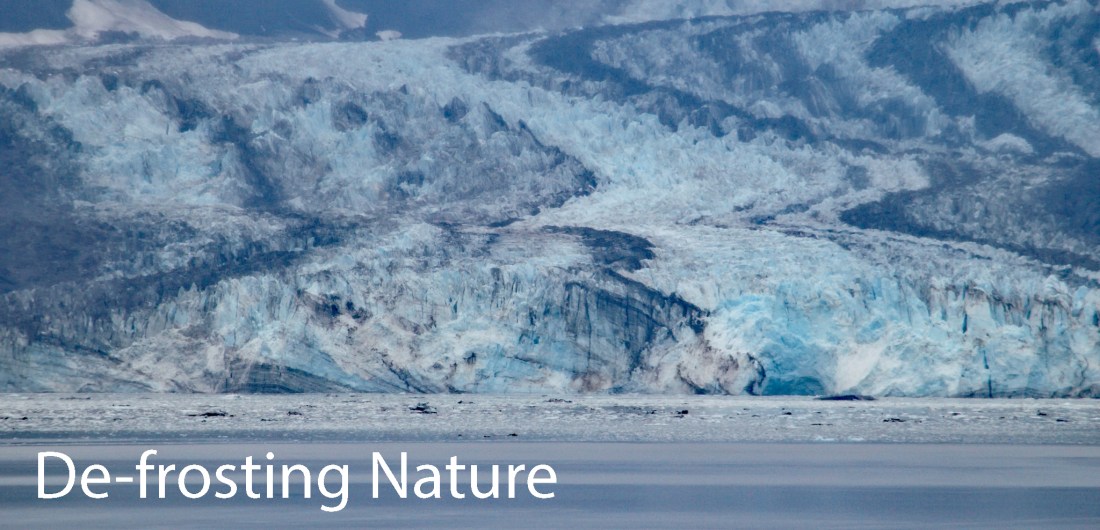
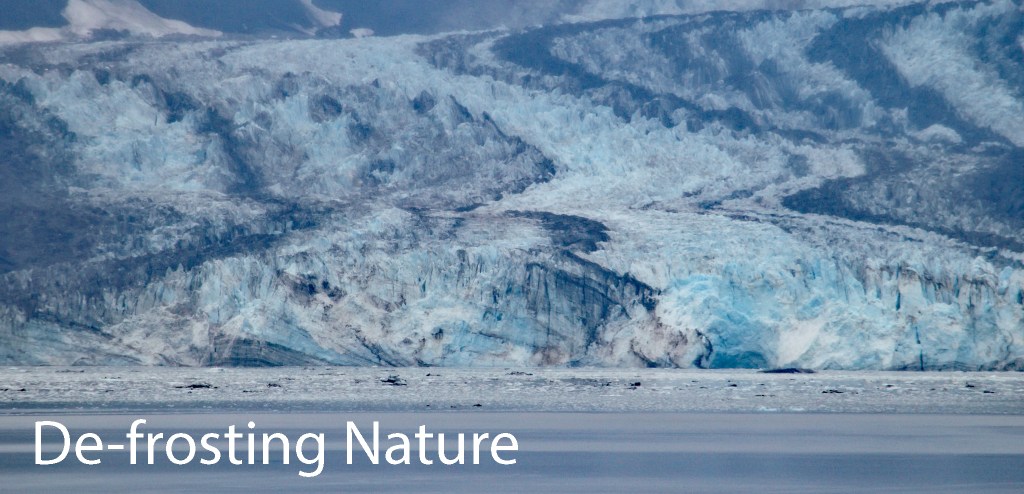
Magnificent. Glacier Bay in Alaska- a very special place, and stunningly beautiful in any weather (except thick fog or a blizzard!).

But the ice is retreating: from the earliest records in 1750, the glacier has melted back 65 miles. The ice mass that filled the bay has retreated into the tributary valleys. Glaciers are always moving, and where the “snout” reaches open water, icebergs will calve off and drift into the seaways. All the while the mountains at the ice of the glacier receive enough snowfall, the glacier will maintain ice pressure sufficient to keep its momentum.

From what we know, the “Little Ice Age” was a temporary return of the ice sheets that had originally stretched deep into the Midwest of North America. There is evidence that the ice has grown and retreated several times in history. Science shows that global warming is now hastening the retreat of the ice. Defrosting Nature has knock-on effects and some of the changes are accelerating.

95% of Alaska’s 100,000 glaciers are currently thinning, stagnating, or retreating, and more importantly, the rate of thinning is increasing. Glacier Bay’s glaciers follow this trend. (National Park stats)

Does that have significance for us? Despite the attitude of some Christian groups- who think ecology is a waste of time because the world will be destroyed/re-created at the Second Coming of Christ- I believe we have a unique responsibility. No other creature on this planet has the science, technology, and applied intelligence to force huge changes onto the environment.

We strip the rainforests, delve deep for fossil fuels, wage massive wars, and poison the waters with our discharges and waste plastics. All these things combine to effectively defrost Nature. More frequent destructive storms are a warning to us all.

Some dispute this narrative- I understand that. What concerns me is that the loudest demurrals are coming from vested interests and weak politicians… whose economies and balance sheets would change. Follow the money to discover WHY certain voices nay-say taking climate action.

Why am I writing about this? Don’t I have more “spiritual” topics?

There is a wonderful story at the beginning of the Bible: it tells us WHY we exist and why the world was created. The Book of Beginnings, Genesis. It is a theological story written for a non-scientific people: and it contains some clear instructions. One is that humankind is responsible for “stewarding” our world: we are caretakers and creative beings. That is our purpose, alongside God. (Genesis 1:24-30)

Nowhere in the Bible is that purpose revoked.

Therefore we still have responsibility- and accountability- for our treatment of the world and everything that lives upon it.

What can we do? Well, what single action can you take regularly that will make a difference? Recycling… political activism… looking after your home/garden… reduce use of fossil fuels… choose means of transport thoughtfully… aid for the poor… Water Aid… reduce one-use plastics… clear litter… dispose of toxic materials correctly… oppose policies that are destructive and exploitative… Add your own ideas.

Giving a better example to the children of today is a good start. They will inherit our messes! It’s not too late to make a difference. Start with one good choice. Learn to make well-informed decisions. And if we make this part of our prayer life, we just might get some hints from the One who knows best!

What one change will we choose?
Last Rose? Look, See, Pray

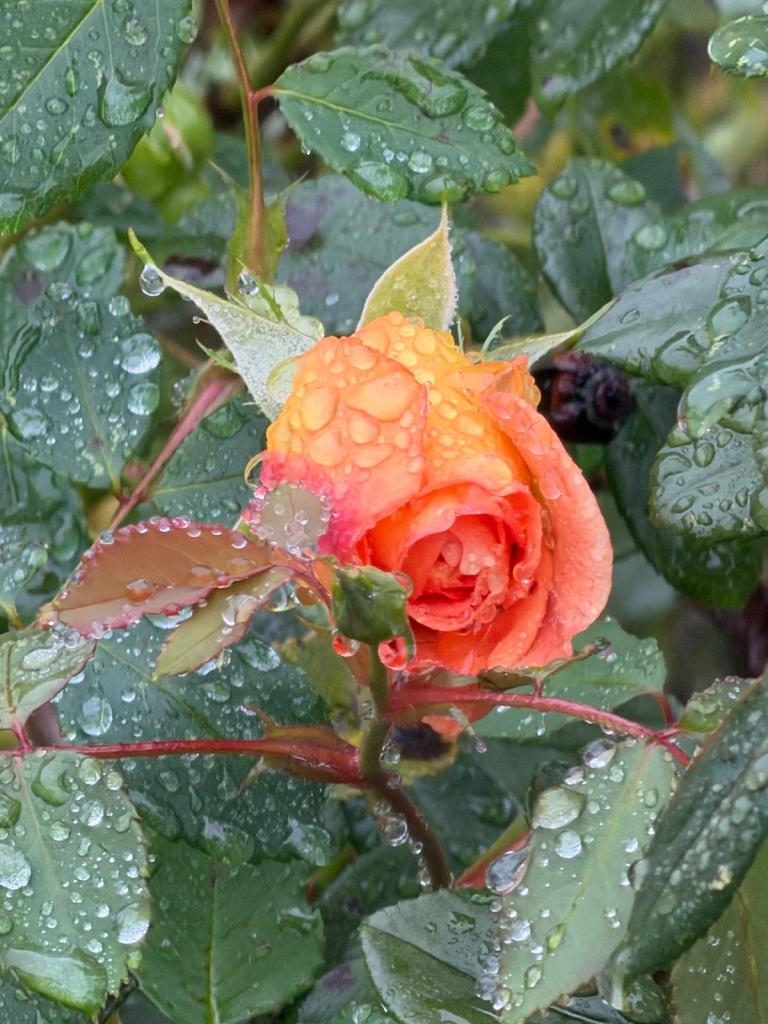
The current image has no alternative text. The file name is: stormy-rose.jpeg

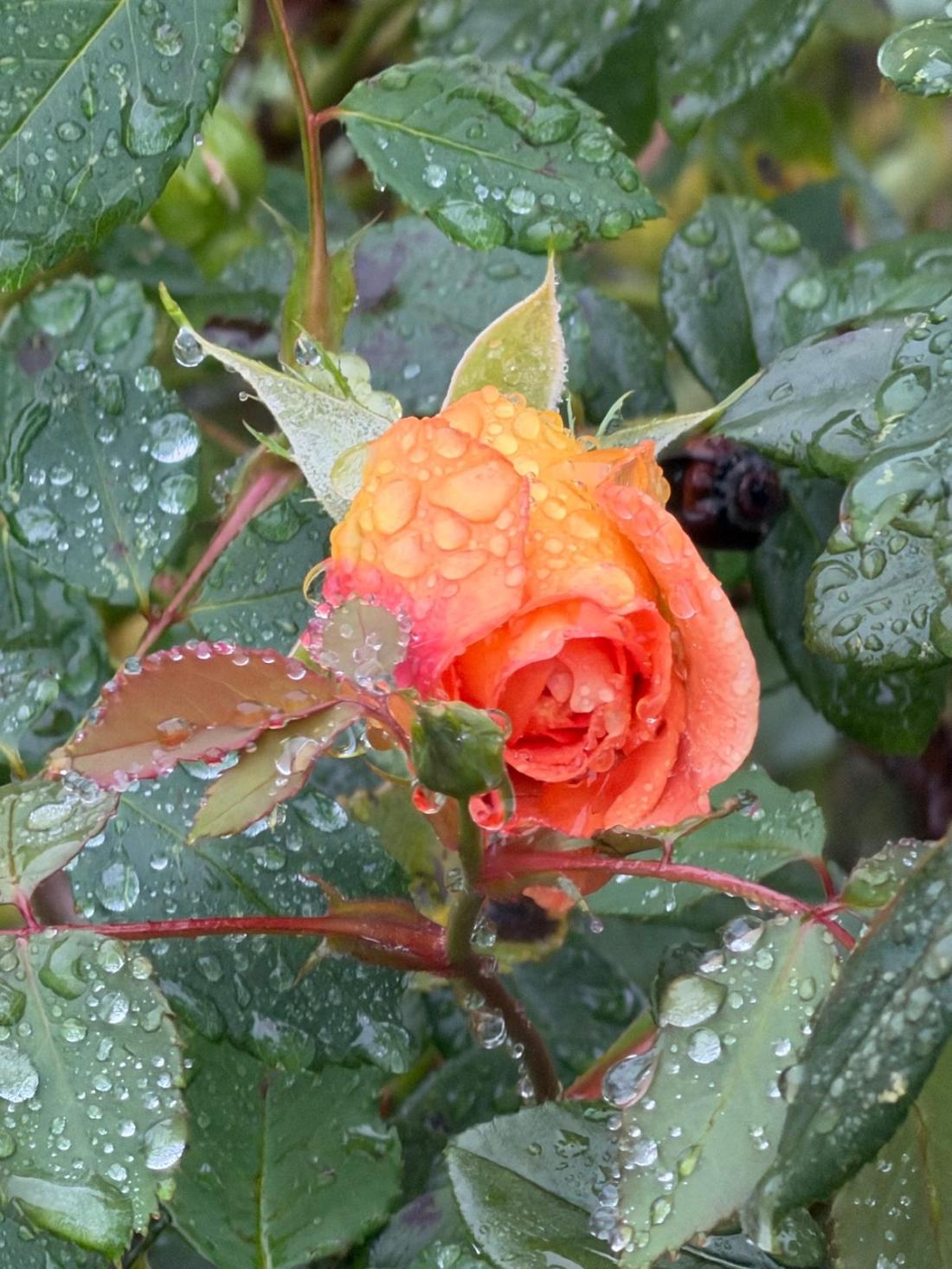
Probably the last rose of the year? After some heavy rain, it has been hanging on and still gives a bucket of joy for the day. I’m not really sure it will still be there tomorrow- the wind has been very gusty all evening: so it may dissolve in the rain or be petals scattered from here to Kent!

Grasping the moment of joy is one of the most important things we can do for our mental and spiritual health.

How many times do we foolishly walk away from a beautiful flower, the laugh of a child, the smiling eyes of our most special person? Sharing moments like these- and making the most of them- adds spice and sugar to both secular and sacred.

An influential secular framework for understanding joy’s purpose comes from psychologist Barbara Fredrickson’s broaden-and-build theory. The core idea is straightforward: joy expands your mental field of vision. Where negative emotions like fear trigger a narrow set of survival responses (fight, flee, freeze), joy sparks the urge to play, explore, and create. It loosens the boundaries of your thinking and makes you more open to new ideas, new people, and new experiences.

Sounds good!

Christianity.com website offers a faith-centred perspective. (The two views are NOT mutually exclusive!)

“Joy is a Divine Gift and Fruit of the Spirit. In the Bible, joy is more than a fleeting emotion; it is a spiritual state rooted in a relationship with God. It is described as a gift from God and a fruit of the Holy Spirit, alongside love, peace, and patience (Galatians 5:22). This joy is independent of external circumstances, providing believers with inner strength and contentment even during trials (Romans 15:13).”

So then- beauty in noticing what is around us, and beauty in the relationship of deep Love as we rejoice in our Maker. Joy can trigger new growth, deeper love, stronger faith, and more purposeful behaviour.

One fleeting moment noticing a rain-dressed rose; another moment where praise or prayer brings God into focus. Let’s not miss out! Opt in- pay thankful attention, and let your heart smile.

A New Viewpoint- Look, See, Pray

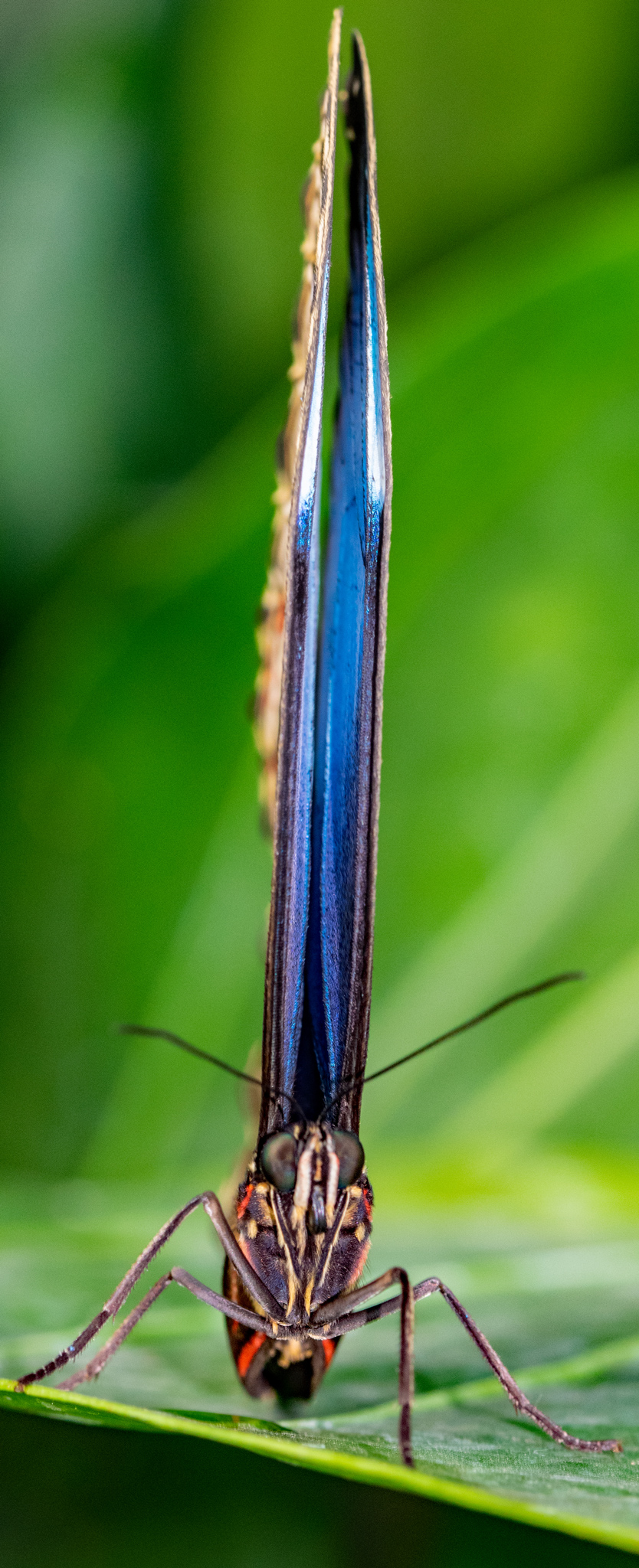
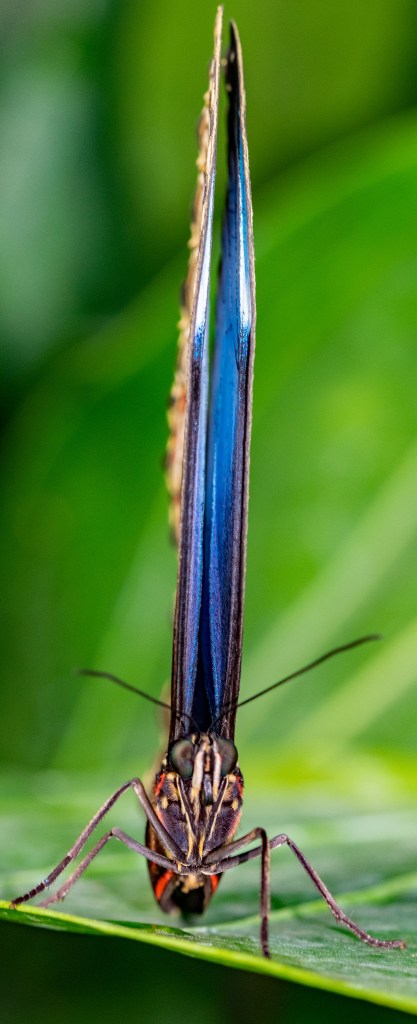
A new viewpoint. Generally, we like to see butterflies with wings extended thus showing off the colours and patterns that make them so spectacular. This one is part of the Owl Butterfly species, with patterns and “eyes” on the underside- and brilliant electric blue tops of their wings. You can see the colour breaking out…

So the photo is intriguing AND disappointing at the same time!

I have concluded that many of the truths and insights of the Christian faith are like this “on edge” butterfly. We get hints; partial revelation that promises “more to come.”

Jesus announces the coming of the Kingdom of God. It is here, it is growing, but its fulfilment is “not yet.” We begin to follow Jesus with a handful of faith and a bagful of questions. Our footsteps are stumbling, yet we keep on getting back up and we learn from the Master as we travel.

We read the Scriptures and marvel: and there is always more to find. The old Puritans said “There is yet more light to break forth from His Word.” We never manage full understanding- but we will find wisdom.

Our eternal life has begun in Christ. There is so much more for us to enter into! Paul writes in 1 Corinthians 2 v9f –

“We, of course, have plenty of wisdom to pass on to you once you get your feet on firm spiritual ground, but it’s not popular wisdom, the fashionable wisdom of high-priced experts that will be out-of-date in a year or so. God’s wisdom is something mysterious that goes deep into the interior of his purposes. You don’t find it lying around on the surface. It’s not the latest message, but more like the oldest- what God determined as the way to bring out his best in us, long before we ever arrived on the scene. The experts of our day haven’t a clue about what this eternal plan is. If they had, they wouldn’t have killed the Master of the God-designed life on a cross. That’s why we have this Scripture text: No one’s ever seen or heard anything like this, Never so much as imagined anything quite like it- What God has arranged for those who love him. But you’ve seen and heard it because God by his Spirit has brought it all out into the open before you. The Spirit, not content to flit around on the surface, dives into the depths of God, and brings out what God planned all along. Who ever knows what you’re thinking and planning except you yourself? The same with God- except that he not only knows what he’s thinking, but he lets us in on it. God offers a full report on the gifts of life and salvation that he is giving us. We don’t have to rely on the world’s guesses and opinions. We didn’t learn this by reading books or going to school; we learned it from God, who taught us person-to-person through Jesus, and we’re passing it on to you in the same firsthand, personal way.”
(Message Translation by Eugene Peterson)

Autumn Gold! Look, see, Pray

Autumn glory! Strong colours, harvest, fruit, mist, mellowness.

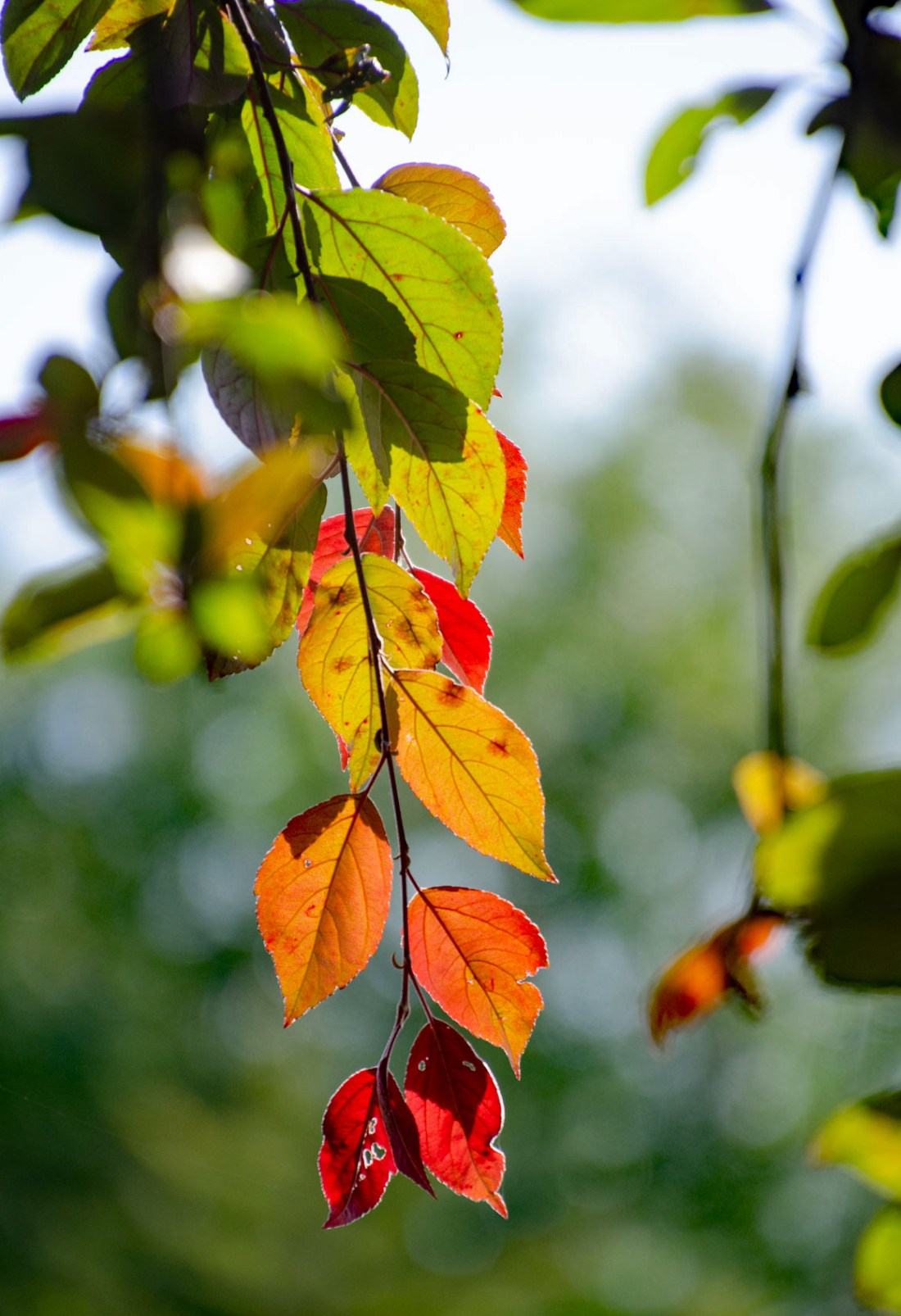
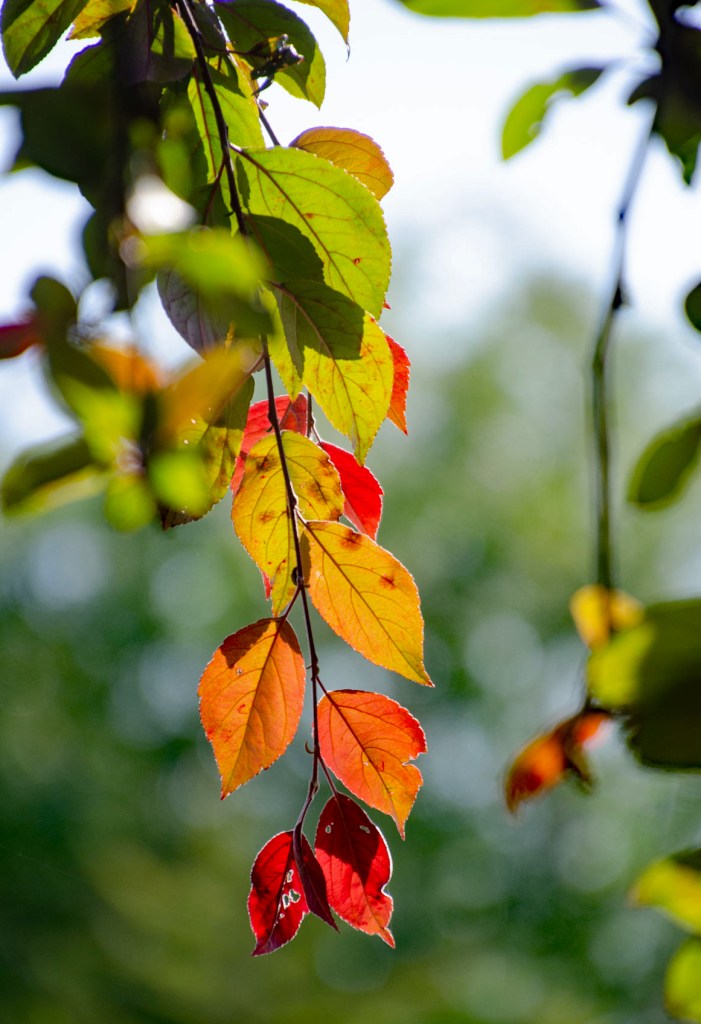
Yesterday we looked at the way Autumn can bring us to a sad moodiness… Today the focus changes. Three different takes on the season: the almost poetic transitions of a cherry tree where leaves slip from green through to scarlet. One twig hangs perpendicular to the ground: the purity and clarity of the colours speaks to me of change. Gentle progression, then exit with fireworks!

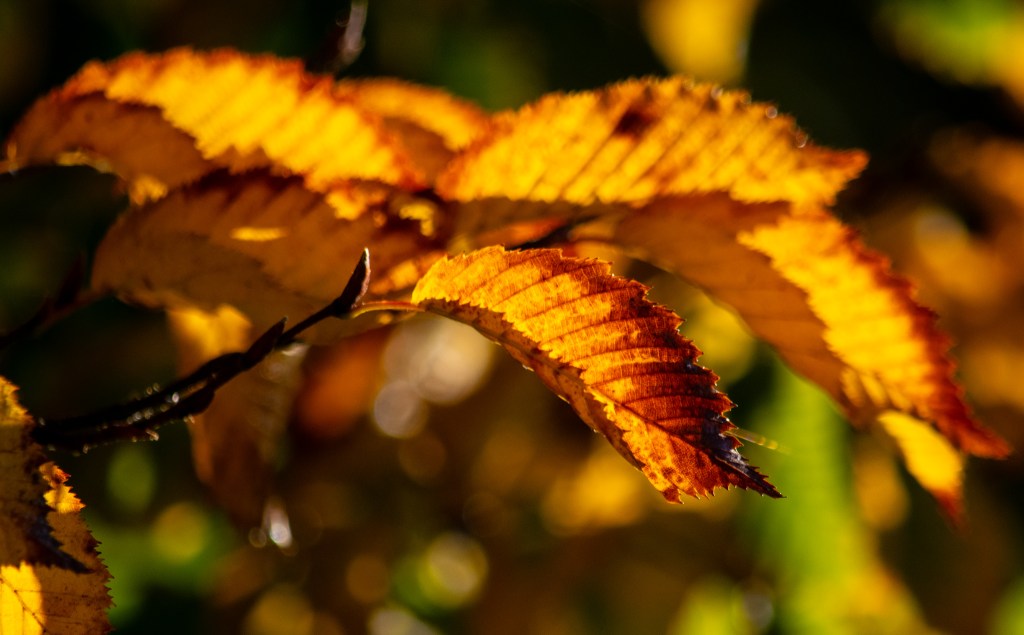
Then the beech leaves: gold and russet, backlit by warm low sunlight. Details of the veins stand out, the edges have crisped, and the strong golden light speaks of richness- the final triumphant fling, screaming out praises to the Creator who has made all things well.

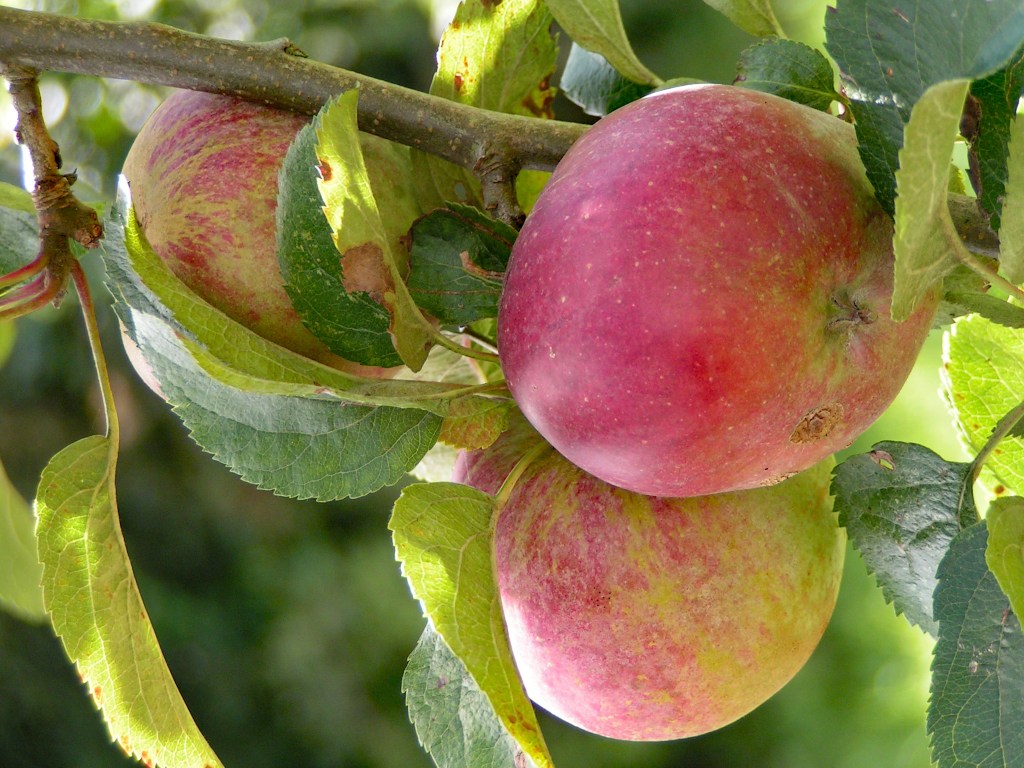
Finally, the fruitfulness of an apple tree. Three perfectly formed fruit, representing the fulfilled promise of God in Genesis 8v22: “For as long as Earth lasts, planting and harvest, cold and heat, Summer and winter, day and night will never stop.”

Mild days, the hints of early frost, the approach of the season of rest. This is Autumn at its best. Respite before the rigours of winter, with the joyful echo of the best of spring and summer blended into a vibrant encore.

To finish, here is a prayer for Harvest by “Christians against Poverty” (C.A.P.).

Dear God, thank you for the rhythm of the different seasons. Thank you for the beauty of autumn, for the changing colours, the cooler air and the harvest food gathered. As I reflect on autumn, help me to see your hand at work, both within me and in nature. Help me to fix my eyes on you so that this season can be a time of gratitude, blessings and generosity towards others.

Faithful, loving God, at harvest time I pause to remember your goodness. Thank you for the wonderful things I have: the beauty of your creation, the kindness of others and the hope you give me in every season of my life. I’m grateful for moments of joy, for the people who walk with me in life and for your love. Help me to hold onto that gratitude, even during hard times, and to share that hope with other people. Amen.

Being Different- Look, See, Pray

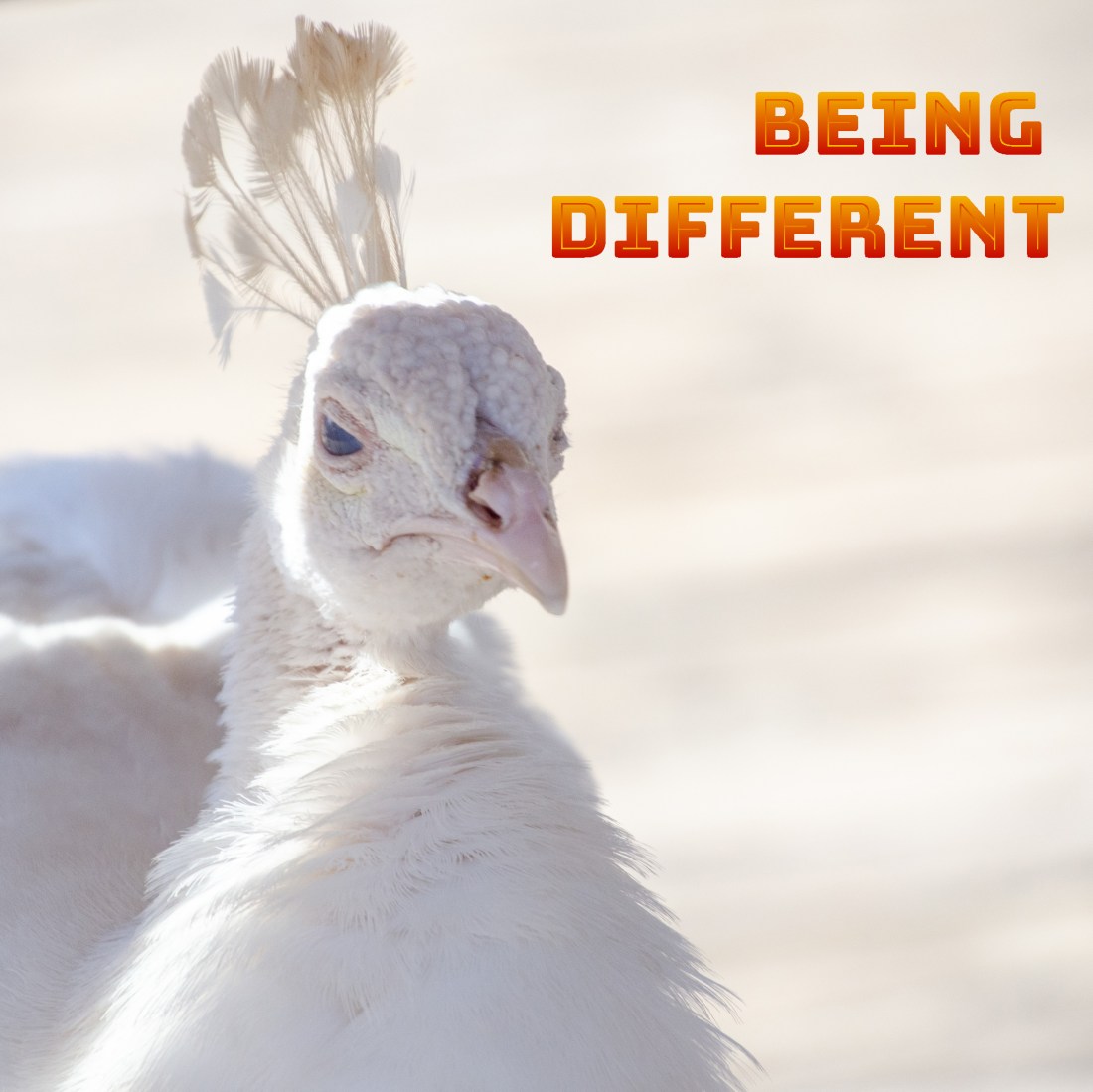
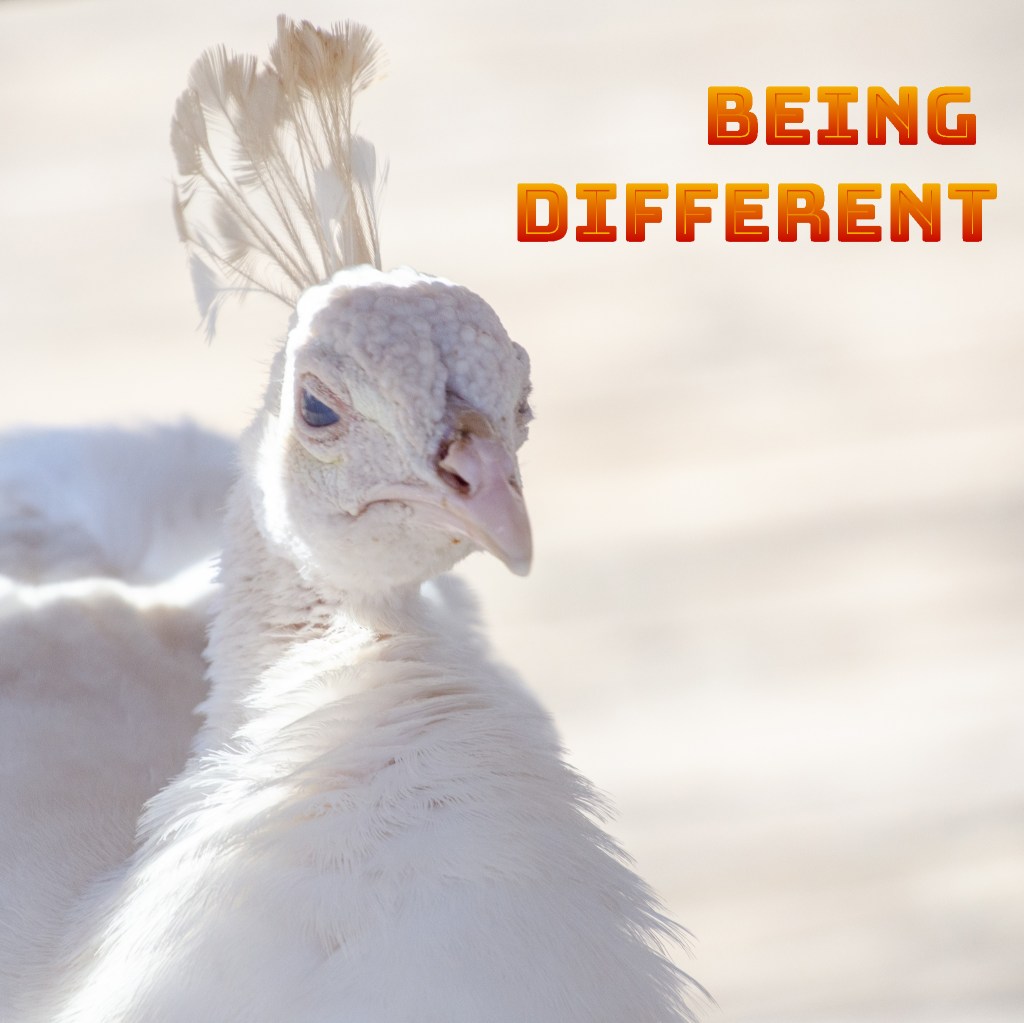
If the first peacock you ever saw was white- you’re in for a shock. Most peacocks are very brightly coloured. How will you adapt to something so different? It works the same the other way round- your “bog-standard blue peacock” world will be surprised or even shocked when you first see a white one.

We build a world-view based on what we come into contact with (especially when we are young). So in my worldview swans are white! The ones on the River Adur were always white therefore swans are white. It’s sort of logical… But not necessarily true. Black swans exist too. Oh the shock to my childish brain!

Then my parents gave me a pet ALBINO rabbit… but Peter Rabbit was brown. No wonder I grew up confused.

The world is full of difference! In fact, that is probably one of the most obvious facts. Dogs in various sizes… cows aren’t just black and white… insects… birds… fish… animals… PEOPLE. Yep, people are all different. Skin colour, hair colour, eye colour. Some people can dance- when I try, I resemble a drunken hippo on a parachute.

Have you noticed how the younger generation ALWAYS have lousy music?

And ridiculous fashion sense? (Ahem… remembering some of the stuff we wore in the 70’s perhaps I should drop that example. Nah, those flared jeans and kipper ties were cool, man. The stuffy grown-ups just couldn’t dig it, bro.)

We are surrounded by difference yet all too often “being different” is the reason for rejection or persecution. Often people who look different speak a foreign language (well, duh) and like weird food- we don’t understand them, and standing next door to that is finding them scary and threatening… What we fear, usually we hate. When hatred takes hold, evil follows.

Racism is an evil thing. Discrimination is an evil thing. Being different is NOT an evil thing.

Variety, diversity, creativity… difference. Isn’t this what gives life its spice and fascination?

JB Phillips translated part of Colossians 1 like this:

Now Christ is the visible expression of the invisible God. He existed before creation began, for it was through him that every thing was made, whether spiritual or material, seen or unseen. Through him, and for him, also, were created power and dominion, ownership and authority. In fact, every single thing was created through, and for him. He is both the first principle and the upholding principle of the whole scheme of creation. And now he is the head of the body which is composed of all Christian people. Life from nothing began through him, and life from the dead began through him, and he is, therefore, justly called the Lord of all. It was in him that the full nature of God chose to live, and through him God planned to reconcile in his own person, as it were, everything on earth and everything in Heaven by virtue of the sacrifice of the cross.

All the differences in the world- and God’s purpose is to reconcile ALL THINGS to Himself through Christ. Will we spurn, fear, or hate those whom God loves? Jesus- the antidote to hatred, and reconciler of all. Even those who are different.

Rest Your Eyes- Look, See, Pray

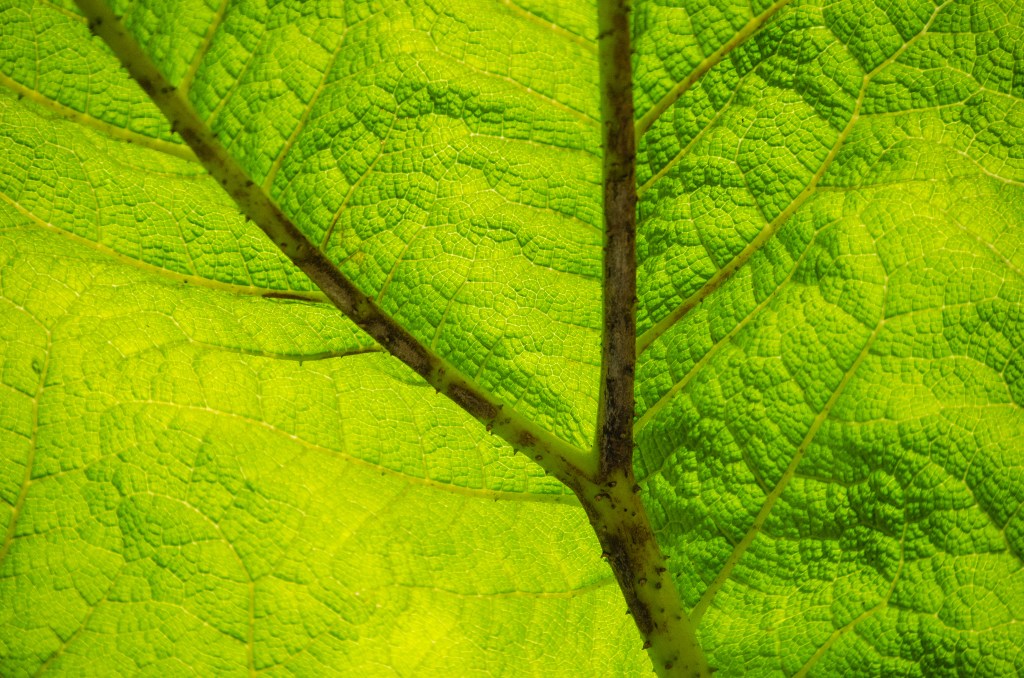
Green is such a restful colour. With the sunlight passing through the leaf membranes, the greens glow; all the tiny veins form patterns linking to the Y-shape of the major stems.

It looks rather like a picture I saw of the rivers of the Amazon Basin viewed from a high satellite pass. The similarity is not just the appearance: the plant uses a “web” of veins and arteries to pass water and nutrients TO the leaf, and thus aid the chlorophyll “factory” working in the leaf bio-chemistry. The chlorophyll is what produces the green colouration. When the growing season ends, the loss of chlorophyll and water turns the leaves brown (until they shrivel or drop).

Just look at the shapes in the composition: allow your eye to wander and explore. What comes to mind? The leaf doesn’t “tell a story” it just exists… is that enough? Or is this photo a waste of space?

Being itself and being displayed can suggest value and beauty. As for meaning… aren’t some pictures valid just because they are pretty?

Let your eye linger on the photo. Does the “simple complexity” cause you to think of the wonder of life, of beauty, of the One who caused Life to be?

To look at a picture or a living scene is one way of tuning in to God’s reality and Being. Some call this practice “Visio Divina” or Divine Seeing; it is a heart-centred practice that invites the viewer to perceive God’s presence through what they see, parallel to how Lectio Divina uses scripture for meditation and prayer.

The practice emphasizes slowing down, gazing with love, and allowing the image to speak to the heart, fostering a direct encounter with the divine. It goes back to St Benedict (c500AD) or earlier: using icons, stained glass, and other forms of art.

Historically, it has been a way to make the invisible grace of God visible through art and creation. Willing to try it? Pick a picture…

(Definition provided by contemplative.org which is worth checking for more insight.)

For the curious- the leaf is a Giant Rhubarb Plant, photographed at Dunster Castle.

Look Better- Look, See, Pray

Looking carefully is the most important part of taking photos. Three pictures here illustrate this quite well. The first shows colourful heather, with green bracken hiding the existence of a steep slope towards the two big pine trees at the back. It’s an insect-rich environment- but there is more to discover.

Those two pine trees are the main point of interest in the second photo. There is a lake in the bottom of the deep gully; and more trees in the background. Can you identify the (several) black objects near the top of the pines? No? You need more information, a pointer or symbol to explain…

Picture Three: carved from the wood of a larger fallen tree, a big cup forms a “nest” – with a wooden heron perched on the side. (The black objects in pic 2 are actual live nests used by a thriving population of wild herons.)

All three pictures supply information about a Heronry in a Country Park set in the hills of Bedfordshire. All are required to tell the story of a conservation/wildlife project protecting the colony of herons, and at the same time providing fresh air and green space for human beings who benefit from exploring the “wild side” of life.

Things don’t always have simple answers or explanations. Social media & TV abbreviate conversations and explorations. The medium seeks to condense everything into a sound bite or slogan. As a result, society only picks up a portion of fact- and the truth gets whittled away when we tell others of the “thing” we have learnt.

It’s why this blog is called Look, See, Pray. First we need to have our attention on life around us, then we need to look harder so we truly SEE what is significant. Then we have to DO something with our seeing: and it can be the “spark plug” that helps us pray in an informed and passionate way. It’s sharing our observations and thoughts with our God. It’s a “Holy Noticing” that opens our eyes, mind and spirit to the glories and realities in our everyday living.

Here we can rejoice in natural beauty, wildlife and ecology; we can enjoy it with thanksgiving. And we can also appreciate the artist’s skill in carving the Heron Nest- and understand the value of a symbol that points us to a thing of wonder.

Or… we can just grunt “nice view” and mutter “why take so many photos…” and pass by the supreme design and execution of the concept of “Heron” by the Creator who made all that we see.

Star of Wonder! Look, See, Pray

Much too hot to do anything today… now sitting here in the cooler evening air, room-fan blasting away, and filing “forgotten” photos. This unidentified beauty was photographed in mid-December, in a local seafront garden. It took me by surprise: most of the garden was dormant, so discovering this flower was a real bonus.

A star-shaped gem! Golden-throated, white petals with delicate pink veins, it “glows” against its sombre foliage.

I think people start to get old when they lose their sense of wonder.

Young children live for the next wonderful surprise. Anything from a falling leaf to a fire engine is greeted with joyful squeals. “Old” folks can walk past a troupe of performing spaniels and not notice! (“Old” isn’t age as such- it’s an attitude).

I hope I don’t get that kind of “old.” My ideal is to bounce along through the years getting excited by everything that comes my way. Greeting my wonderful wife with a smile, not a grunt, and cooking her breakfast… listening to music, being thrilled by colours, enjoying books and words and jokes and good conversations… excited by the green woodpecker on my lawn last week and the golden-throated flower on a winter’s morning. Glorious wonder!

This is the feeling I get when I read the opening verses of John’s Gospel. Sheer excitement rooted in the Beginning of Beginnings, the Holy Dance of the Trinity, and the personal witness of the “disciple whom Jesus loved.” Here are the first five verses as translated in the “Message”- I hope it makes YOUR heart sing!

The Word was first,
the Word present to God,
God present to the Word.
The Word was God,
in readiness for God from day one.
Everything was created through him;
nothing- not one thing!-
came into being without him.
What came into existence was Life,
and the Life was Light to live by.
The Life-Light blazed out of the darkness;
the darkness couldn’t put it out.

(John 1:1-5, Message)

Blessed Nostalgia? Look, See, Pray

Indulge me in a spot of nostalgia! Today’s delectable weather included high winds and heavy showers, so I decided to look for some sunshine & warmth. Bees on sunny-scented warm lavender did the trick! Imagining the gentle droning of happy bees is a lovely way to spend some indoors time.

Can nostalgia be a spiritual practice or discipline?

It depends on what we are hankering after. To live in the past is not ideal, especially if it causes us to devalue the present or future.

On the other hand, we are shaped by our personal experiences and social history, and we need the perspective that can be gained. Someone I know who regularly makes the same mistake, time after time, is both annoying and pitiful. Another acquaintance has gained wisdom and reputation by taking the time to learn from a range of experience AND apply that wisdom to support and guide others.

Looking back can be helpful- or dangerous. Lot’s wife “looked back” at her old life and was turned into a pillar of salt (see Genesis 19). There is a salt-rock feature near the Dead Sea named “The Pillar of Lot’s Wife.”

More positively, there are several instances where Israelites erected altars or stone monuments, dug wells, and planted trees where a significant God-encounter happened. These reminded them of the nature and power of God, and inspired Israel to put the Lord first. These became symbols of faith and obedience.

Now, I am a “visual” person. I respond to what I see, and find inspiration in observing and photographing the handiwork of our Creator. So my collection of photos is like a Book of Psalms- I use them to remember, to praise God, to be thankful, and to learn from the actions and interactions I have seen. Which is why this ‘Look, See, Pray’ page exists. Bees and plants (etc) can be keys to unlock the soul.

If you respond in similar ways, your own photos or paintings may serve you well. Or perhaps for you it is sound, smell, taste or touch that can unlock good spiritual nostalgia. Try them out: see what helps you enter the Presence of Christ. Used alongside Word & Spirit, nostalgia can be a blessing to lead you onward with God.

And if you find ‘Look, See, Pray’ stimulating, please recommend or forward posts to others. Thanks and bless you!

Frosted Clarity- Look, See, Pray

Frost has outlined these little beauties. Rims and veins have attracted icy crystals which accentuate the shapes and forms of flower, berry and leaf. It makes for a nice picture!

You may be surprised to know it can help us do theology too.

Theology is “God Knowledge/Thinking.” The information we have, the principles we hold to, and the interpretation of God’s revelation enable us to begin to comprehend God. We debate, discuss, argue, theorise, and write BIG books! (Wouldn’t it be helpful sometimes to have a simpler explanation, a short book or cartoon instead? If so, read on about the frosty rose!)

Christians have prepared summaries of what we believe: we call them Creeds. “I believe in God the Father…” is the beginning of the Apostles’ Creed (one of the mainstream standards). These Creeds have been agreed by many believers over many years, and are often familiar to most churchgoers.

Each Creed sets out statements of faith; the things we agree on as “standard” for Christianity. They set out a “map” of faith, rather like the frost on the rose petals. We see where each one fits, what’s “in” as a part of normal faith. (There are, of course, differences of emphasis and nuance between the churches! But bear with me on the main principle.)

We cannot fully comprehend God- but one central Christian belief is that God has been and is self-revealing. We can see the Divine in Creation itself- through beauty and awe. The Bible is a written collection of the history of God’s interaction with humanity, inspired by God and amazingly effective at teaching us about God and His Ways.

I suppose we could write different doctrines on every petal to make it even clearer. For example: the nature of God; Creation; Salvation; Bible; Ethics, etc., etc.

Theology is the whole rose- but the parts can be looked at separately. We can always discover and experience more of God; so our study is open-ended, and there are “mysteries” as well as plain and obvious truths. But even if the rose is a symbol for theology, God is above and beyond it- the Gardener who is greater than the rose (or the whole garden).

Do you get the idea? Just as the frost has highlighted nature’s beauty, so choosing particular aspects of faith to study helps to make sense of the bigger picture.

The best starting place?

The life, teaching, death and resurrection of Jesus. As set out in the four Gospels, Matthew, Mark, Luke, and John, we are introduced to the best self-revelation of God.

As Jesus said, “If you have seen me, you have seen the Father.” (John 14 v9)

Start here: GO.