

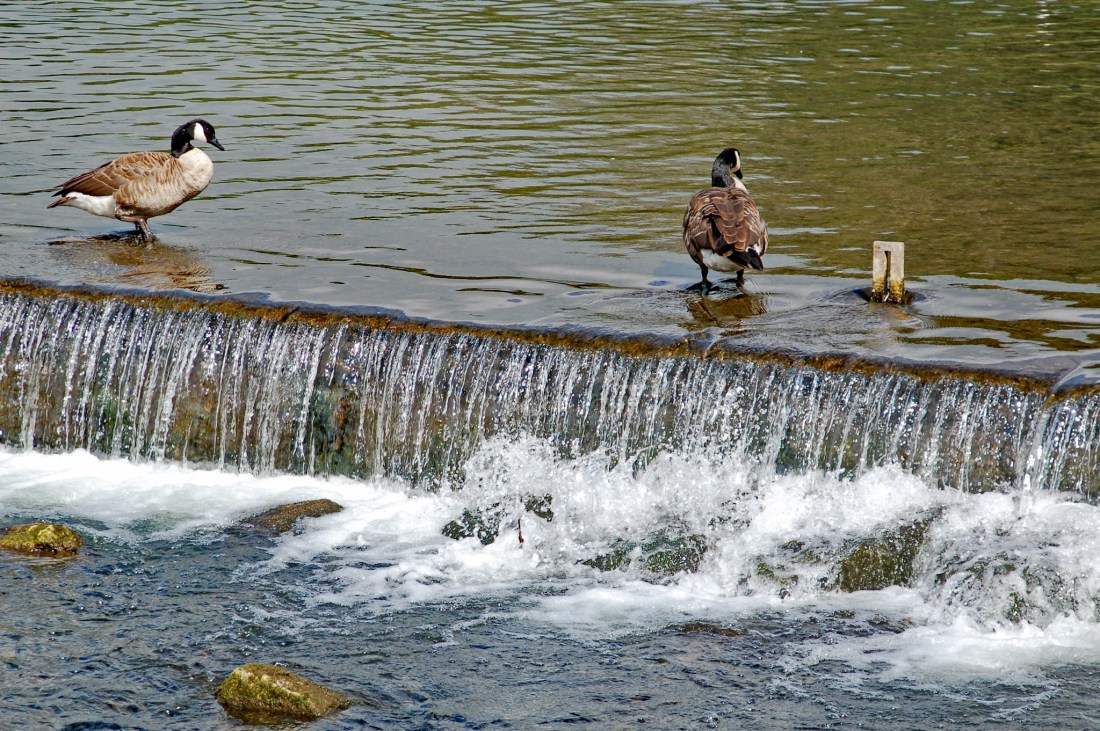
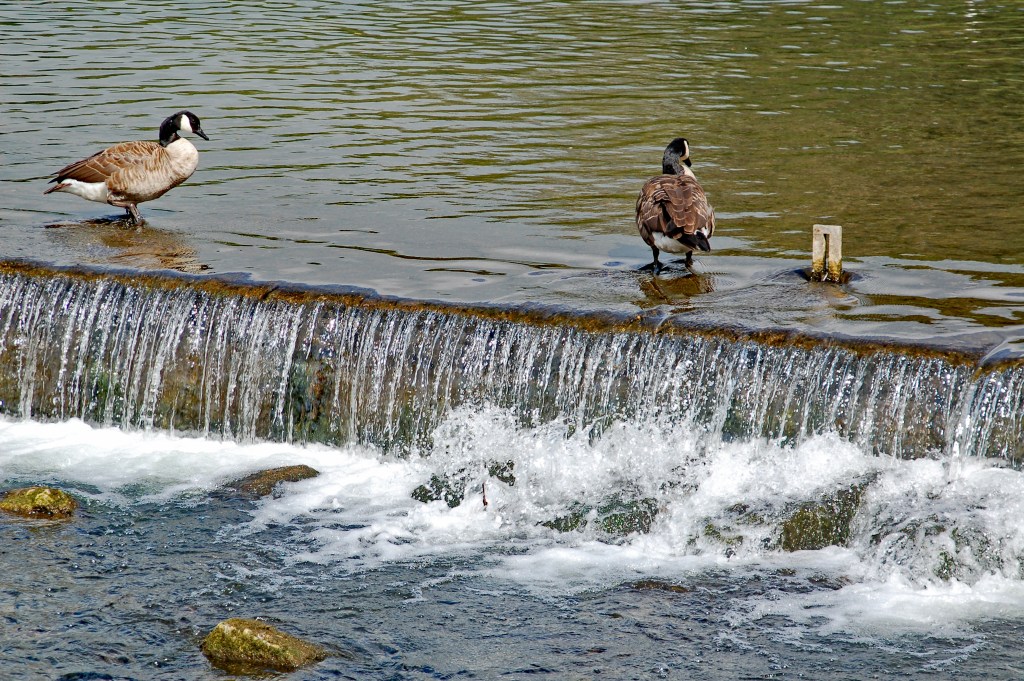
Balanced on the brink… two Canada geese on the weir-step of the River Wye in Bakewell. They have mastered the art. The top of the weir is narrow, slippery, and the current flows quite strongly- any person trying to cross would be odds-on for a cold bath. Kids sometimes try this sort of stunt, much to the alarm of watching adults. That’s because the adults recognise the risks.
Watching the river water cascade down the step is fascinating. Every now and again a duck will use the weir as a “down escalator” by lifting its webbed feet and sliding on the current and over the edge. I never saw any geese trying the same trick- but who knows?
It all reminds me of the perilous politics of brinkmanship. The Middle East is aflame (again) as a result of extreme leaders on both sides daring each other to “have a go.” Balanced on a slippery platform,
I don’t have expertise in international power-politics. All I will say about that is my concern for the innocents caught up in another war. That leads me to urge prayer for peace and justice; without God’s intervention the prospect of peace is vanishingly small. Do our prayers make a difference? I believe so.
This morning a phrase came to mind as we prayed at church. “We are the antibiotics sent by God to address the fever of the world.”
Christians who pray and act on their prayers achieve more than we realise. Our union with Christ makes us part of the Kingdom of God, and our words and actions are an expression of Jesus lived into the world. We pray out of compassion, and, if we’re honest, out of fear. But also out of duty: for our faith means we take an active position as peacemakers. Sharing the heart of God in the face of violence and tragedy, we intercede for all sides and trust that the Lord can in some way use our prayerful concern.
Out of chaos, order. Out of disaster, hope. Perhaps, even, out of the dis-ease of violence there can emerge a just peace.
We are not standing on the brink for the thrill of the ride! But we are here in the Name and authority of Jesus, Prince of Peace. Lord, in your mercy, heal our world. Amen.



 Look, See, Pray